
Why Building Background Knowledge is Essential for Making Inferences
What 'The Heart and the Bottle' Can Teach Us About Making Inferences

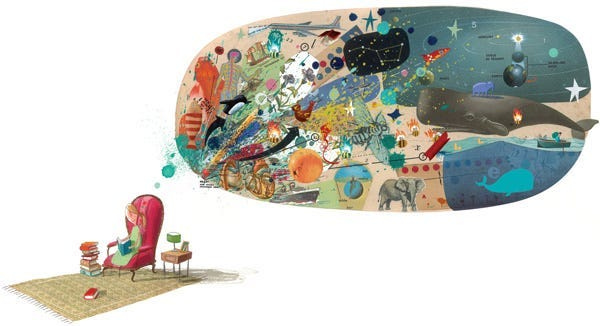
(The Heart and the Bottle by Oliver Jeffers)
What helps children truly understand what they read? It’s not just recognising words or reading aloud with expression. True comprehension goes deeper. It’s about making sense of what is not directly stated in text—reading between the lines, connecting ideas, interpreting emotions, and uncovering meaning that lies just beneath the surface of the text.
Consider Oliver Jeffers’ The Heart and the Bottle, a deceptively simple picturebook. On the surface, it tells the story of a curious young girl who places her heart in a bottle after experiencing a deep sadness. But understanding this story requires more than decoding the words or naming the illustrations. To truly grasp its message, readers must make inferences about grief, emotional withdrawal, and the process of healing.
These inferences don’t happen in a vacuum. They depend on what the reader already knows about the world. And that’s the core message of this post: background knowledge is essential for making inferences. Whether children are reading richly layered picturebooks, simple decodable texts or more complex texts, the knowledge they bring with them shapes what they take away.
What Is Inferencing?
Inferencing is the process of constructing meaning beyond what is explicitly stated. Readers draw logical conclusions by combining clues in the text with what they already know about the world.
In The Heart and the Bottle, for example, Jeffers never explicitly states that the girl’s sadness comes from the death of a loved one. He shows an empty chair, a missing figure, and a girl whose curiosity fades. Readers infer the loss not because it is spelled out, but because they can connect the subtle cues in the text with their own understanding of loss and absence.
This is the essence of inferencing. As Anderson and Pearson (1984) described, comprehension is a two-way interaction: the text activates relevant schemas, or mental structures of prior knowledge, and those schemas shape how readers interpret meaning. Without appropriate background knowledge, inferencing breaks down.
Strategy Alone Isn’t Enough
In many classrooms, comprehension is taught as a set of generic strategies such as predicting, questioning, summarising. These can help readers monitor their understanding, but as reading researcher Hugh Catts argues, they are not the engine of comprehension. Catts makes the case that comprehension is not a transferable skill, like riding a bike. Instead, it is knowledge-based and heavily dependent on familiarity with language, concepts, and the world.
To return to The Heart and the Bottle: if a child doesn’t know that people sometimes withdraw emotionally after a loss, they may find the girl’s actions puzzling. Why is she putting her heart in a bottle? Why does she grow uninterested in the stars and the sea? No comprehension strategy can make up for the absence of that emotional schema.
Teaching children to visualise or make connections only works if they have something to connect to. As Catts puts it, ‘You can’t think about what you don’t know.’
Local and Global Inferences
To comprehend a story fully, readers must make both local and global inferences.
Local inferences help readers connect information across nearby sentences or events.
In The Heart and the Bottle, readers infer from a sequence of pictures that something significant has changed. For example, the chair is empty, the girl looks sad, the stars no longer sparkle for her. These inferences rely on recognising subtle shifts and drawing immediate conclusions.Global inferences, however, require the reader to integrate information across the entire story. The bottle becomes a metaphor for emotional self-protection. The girl’s eventual release of the heart suggests healing, rediscovery, and a return to curiosity. To arrive at this deeper meaning, the reader must draw on broader knowledge of grief, recovery, and the symbolic nature of stories.
Children unfamiliar with these ideas may miss the emotional resonance of the book. They might see it as simply strange or sad, without grasping the transformative journey at its core. But for children who have that knowledge, whether from life experience or guided exploration, the story becomes deeply meaningful.
What This Means for Reading Instruction
If comprehension depends on knowledge, then instruction must go beyond teaching strategies. Children need rich, structured opportunities to build knowledge across domains and subjects from science, history, literature, the arts, as well as rich vocabulary knowledge.
Picturebooks like The Heart and the Bottle are powerful precisely because they require this kind of depth. They are not just stories to be read but stories to be understood. And that understanding is shaped by what the reader brings to the text.
When a teacher reads The Heart and the Bottle aloud in class, comprehension is not measured by whether a child can retell the plot. It’s about whether the child understands why the heart was bottled, what was lost, and what was ultimately found again.
What Can Teachers Do?
If we want to support children's ability to make inferences, we must ensure that knowledge-building is part of everyday literacy instruction. This includes reading, discussion, and writing experiences that deepen understanding and provide opportunities to practise drawing meaning from context.
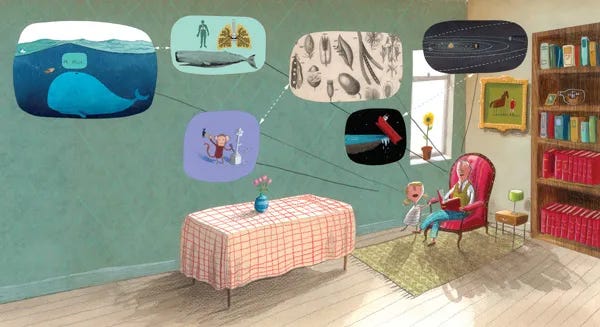
(The Heart and the Bottle by Oliver Jeffers)
Here are six practical ways teachers can help:
1. Teach Knowledge Explicitly
Introduce and build background knowledge across a broad range of topics—history, geography, science, and cultural traditions. Don’t delay rich content until older classes. A well-sequenced, knowledge-rich curriculum gives children the tools they need to make sense of the texts they encounter.
2. Pre-Teach Vocabulary and Context
Before reading, introduce key words and ideas that will appear in the text. If reading a story set in a historical or unfamiliar setting, take time to discuss the context. Children cannot infer meaning from something they have never encountered.
3. Use Read-Alouds to Build Schema
Choose texts that challenge children to think beyond their immediate experience. Reading aloud more complex texts provides access to ideas, structures, and vocabulary that support inference. Use these opportunities to model how to connect ideas and draw meaning from clues.
4. Connect New Texts to Familiar Experiences
Link reading material to themes children understand. For example, when exploring a story about migration or belonging, help children reflect on times they have felt new, out of place, or welcomed. These emotional connections provide a foundation for inferencing.
5. Be Intentional About Text Selection
Choose texts that not only support reading development but also expand general knowledge. A cumulative approach to reading across the year, where one text builds on another, helps children develop deeper schema, which strengthens comprehension.
6. Use Writing to Reinforce Inference Through ‘Show, Don’t Tell’
Writing and reading development go hand in hand. When children are taught to “show, not tell” in their own writing—by describing actions, feelings, and settings rather than stating them outright—they begin to understand how authors expect readers to infer. For example, instead of writing ‘John was angry,’ a child might write ‘John slammed the door and folded his arms.’ In doing so, they learn how meaning can be conveyed implicitly, just as it is in reading.
Want to Go Deeper?
If you’re interested in learning practical strategies for teaching inferencing, especially in the early years, I’d love to point you to the Reading Road Trip podcast from IDA Ontario.
I recently joined as a guest on the show to talk to the wonderful Kate Winn about how we can support children to make meaning from text by building background knowledge and teaching inference explicitly. It’s a rich conversation packed with classroom ideas, examples, and research insights.
Listen to the episode here
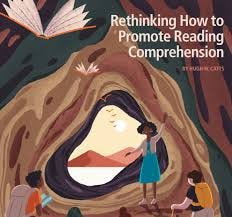
I also highly recommend Hugh Catts’ article Rethinking How to Promote Reading Comprehension (2021) which challenges some long-held assumptions about strategy instruction and makes a compelling case for the central role of knowledge in comprehension.
It’s a must-read for anyone rethinking how we teach children to understand what they read. You can read it here.
Final Thought
In The Heart and the Bottle, the girl’s story is never fully explained and that’s what makes it powerful. It invites the reader to make sense of the unspoken, to fill in the emotional gaps, and to see beyond the literal. But none of that is possible without background knowledge.
Reading comprehension is not a matter of applying generic strategies to any text. As Catts reminds us, it’s a deeply situated process anchored in language, shaped by knowledge, and activated by experience. The more children know, the more meaning they can make.
We can’t teach children to infer without giving them something to infer from. So instead of asking, What strategies should we teach next?, perhaps we should ask:
What knowledge do our children need to truly understand the stories we place in front of them?