
The Power of Playful Language
Why Jokes, Puns, and Wordplay Matter in the Classroom

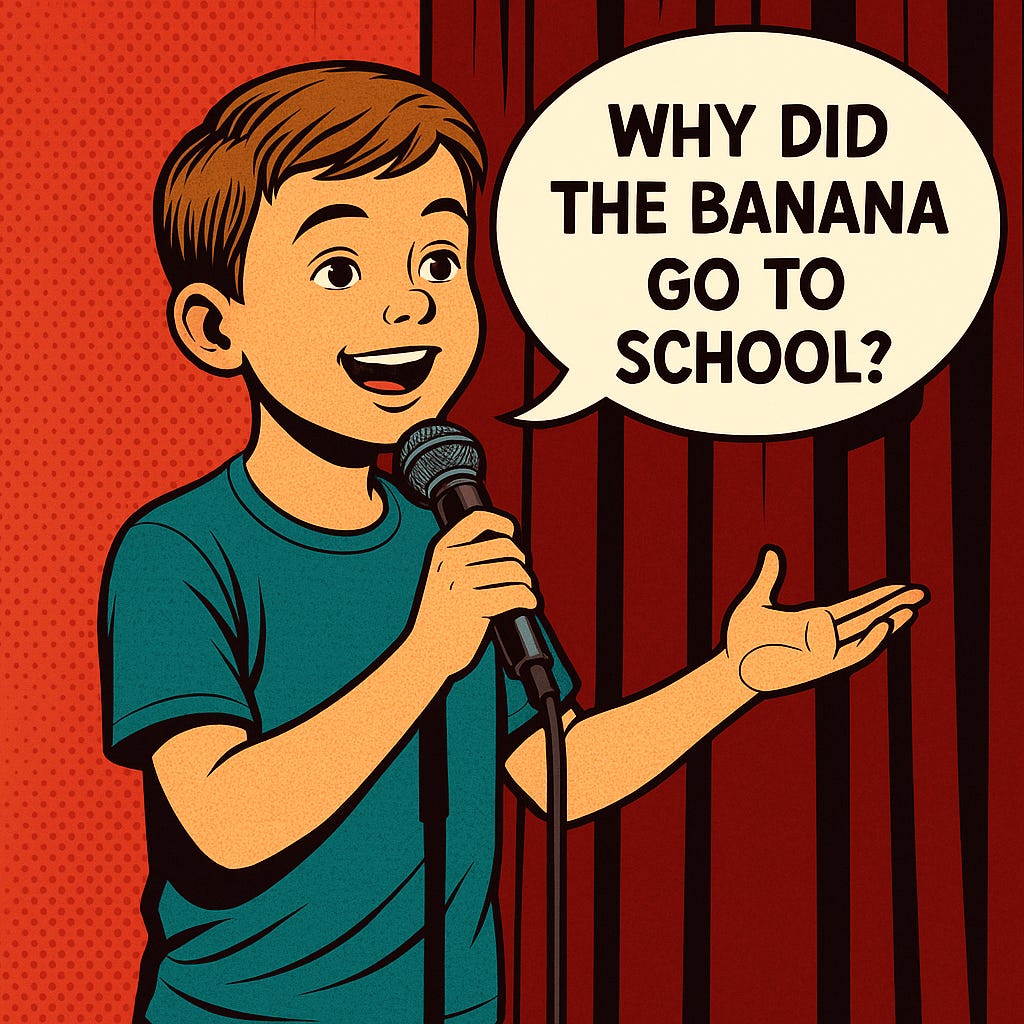
I remember a moment in my own classroom, years ago, just before a morning read-aloud. One of the children raised his hand, highly excited.
‘Teacher,’ he said, ‘Why did the banana go to school?’
I smiled and played along. ‘Why?’
He grinned: ‘Because… it forgot its shoes!’
The whole class burst into laughter, some because they genuinely thought this was hilarious, others simply because the rest of the class was laughing. The joke, of course, made no sense. But in that moment, it didn’t need to. What mattered was that this child was experimenting with language, trying out the rhythm and shape of a joke, playing with words and timing, and learning that language can be a source of delight.
Why Young Children Are ‘Bad’ at Jokes (and Why That’s Good News)
The truth is, young children are often terrible at telling jokes. They miss the punchline, muddle the setup, or deliver punchlines that make no sense at all. One child might say, ‘Why did the cat go to the shop? Because… broccoli!’ and burst into laughter. Others might try to imitate the rhythm of a joke they’ve heard, but replace key words, strip away the logic, or completely forget the ending. To an adult, the result is often nonsensical or absurd. But to a child, it’s play.
This ‘bad’ joke-telling isn’t a failure of understanding—it’s a sign of emerging skill.
Telling a joke, especially one based on wordplay, is a highly complex linguistic act. It draws on a range of cognitive and social abilities that are still developing throughout the early years. To land a joke successfully, a child needs to:
Recognise that language can be ambiguous – that words or phrases can mean more than one thing.
Hold two meanings or interpretations in mind at once – a literal and a figurative one, or two definitions of a homonym.
Understand how to build and release anticipation – delaying the punchline just enough to create surprise or delight.
Be aware of the listener’s knowledge – and whether they will understand the joke.
A good joke-teller must not only know the words; they must also understand how to guide the listener through a narrative that ends in a twist.
The Developmental Trajectory of Humour
Linguist Paul McGhee outlined a developmental framework for children’s humour in the 1970s that remains relevant today. His work shows that very young children (around ages 2–3) delight in physical or visual incongruity (eg. wearing shoes on their hands), while older preschoolers (4–5) begin to enjoy nonsense jokes and simple absurdities. True wordplay and pun-based humour often don’t emerge until around age 6 or 7, when children start to grasp that the same word can carry different meanings depending on context.
So when a young child tells a joke that doesn’t quite make sense, like ‘Why did the banana go to school? Because it forgot its shoes!’ it’s not a failed attempt at humour. It’s a developmental milestone. This joke reflects a growing understanding that jokes follow a structure (a question and a surprising answer), that certain objects (like bananas) are funny, and that there is joy in sharing laughter with others. What the child may not yet grasp is how meaning and ambiguity work together to create actual wordplay. But they are on their way.
The Magic of Multiple Meanings
At the heart of many jokes, puns, and riddles lies semantic flexibility—the ability to shift between different meanings of the same word, or to recognise that words which sound the same can mean entirely different things. This flexibility is what allows language to surprise, delight, and sometimes confuse. And it's also a key ingredient in how we make sense of what we read.
Take this joke, for example:
What did the tree wear to the pool?
Swimming trunks.
For an adult, the humour is clear. But for a child, understanding the joke relies on several layers of knowledge. First, they need to know that trunk can refer to both the base of a tree and a pair of swimming shorts. Then, they must make the mental leap to realise that the punchline depends on this dual meaning. Finally, they need to appreciate that this collision of meanings is what makes the joke funny.
This kind of wordplay is cognitively demanding. To appreciate the humour, a child must draw on:
Vocabulary knowledge – knowing both meanings of the word trunk and accessing them quickly.
Inferencing skills – using contextual cues and background knowledge to bridge the gap between question and answer.
Cognitive flexibility – mentally toggling between meanings and holding multiple interpretations in mind.
It’s no surprise, then, that children who grasp these kinds of jokes are often demonstrating more advanced language and comprehension skills.
From Punchlines to Paragraphs: Why It Matters for Reading
The same set of skills required to understand a pun or joke is essential for reading comprehension. When we read, we are constantly negotiating meaning. We encounter homonyms, idioms, metaphors, and culturally specific references. We disambiguate based on context, draw inferences, and revise our interpretations as new information becomes available.
Consider the sentence:
She ducked behind the hedge.
Depending on context, ducked could mean she bent down quickly or she avoided something metaphorically. A child who has experience playing with multiple-meaning words is more likely to pause, consider, and make sense of such ambiguity.
Wordplay also invites children to explore how context shapes interpretation. The word jam in:
I got stuck in a jam.
...could refer to a traffic jam, a difficult situation, or even a literal spill of strawberry preserves, depending on what comes next. When children are exposed to jokes that rely on ambiguity, they are learning to consider how meaning changes depending on the surrounding text, the speaker’s intent, and the social or cultural context. Jokes offer a playful, low-stakes way to introduce or explore these concepts.
Engaging with puns and riddles also builds metalinguistic awareness, a child's ability to think about language as an object in itself. When children puzzle over why a joke is funny, they’re not just understanding the meaning. They’re understanding how meaning is constructed.
The classroom becomes not just a place for absorbing language, but for experimenting with it.
Making the Most of Teachable Moments
Often, the richest opportunities for teaching about wordplay come in unplanned moments, when a child misinterprets a word, or when a slip of the tongue produces an accidental pun. Seizing these moments reinforces that language is flexible, dynamic, and fun.
Playful language can also be planned for and integrated into daily literacy routines with minimal time investment.
Morning Meetings: Riddle of the Week
Post a riddle or joke on the board each Monday or each morning. Let children puzzle over it and guess answers.
Homonym Word Wall
Create a display of homonyms (eg. bat, bank, ring). Add pictures or sentences showing each meaning. Invite children to come up with their own examples and even invent puns.
Pun Puppet Theatre
Have puppets tell jokes that hinge on double meanings.
Idiom Illustrations
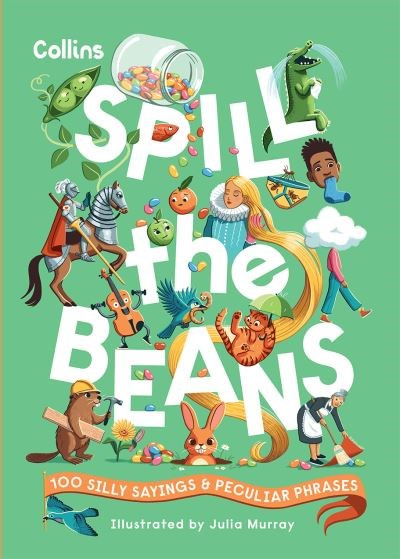
Teach children idioms like “raining cats and dogs” or “spill the beans” to illustrate literally, then discuss their figurative meanings. This bridges the gap between humour and comprehension. This following book is a fantastic resources when introducing idioms to children:
Why Wordplay Can Be Difficult for EAL Learners
While puns, jokes, and riddles can be a source of delight for many children, they present a unique set of challenges, and opportunities, for children learning English as an additional language (EAL). Wordplay often depends on shared cultural knowledge, idiomatic expressions, or sound-based humour that doesn’t translate easily across languages.
EAL learners may struggle with:
Homophones and homonyms: Many languages do not have as many phonetically similar words as English, or may not mark them the same way. Words like trunk, jam, or bat can be confusing when encountered in a joke, rather than a clear, structured sentence.
Idiomatic and figurative language: Jokes involving idioms (eg. raining cats and dogs, break the ice, pulling your leg) can be baffling to EAL students, especially if taken literally.
Cultural references: Jokes or puns that rely on shared cultural knowledge, such as brand names, historical figures, or popular TV characters, may exclude children unfamiliar with these contexts.
Speed and subtlety: Puns often rely on timing and rapid associations, which can be difficult for children still building their receptive vocabulary and processing speed in English.
Without support, these children may feel left out of the joke—literally and figuratively.
Making Wordplay Accessible for EAL Learners
To ensure all children benefit from playful language, we need to be intentional about how we introduce and support it. Here are a few inclusive strategies:
Use visuals and gestures: When introducing a pun or riddle, pair it with a picture or act it out. For example, draw both meanings of bat or use props to show trunk as swimwear and as part of a tree.
Pre-teach key vocabulary: Before sharing a joke or story that relies on multiple meanings, explain the words involved in both their literal and figurative senses.
Slow down and repeat: Give EAL learners time to process the joke, explain the double meaning, and invite them to try it out themselves.
Encourage bilingual wordplay: Invite children to share jokes or idioms from their home language and explain them to the class. This supports their linguistic knowledge and shows that language play exists across cultures.
Celebrate effort, not just comprehension: Praise attempts to engage with humour, even if the joke doesn’t land perfectly. The process of playing with language is what matters.
Closing Thoughts: Language as a Playground
In the end, jokes, puns, and riddles are not distractions from learning—they are essential to it. Wordplay helps children understand that language is not static but flexible, that word meanings can shift depending on context, and that language can be used to amuse, surprise, and connect.
These moments of humour, curiosity, and delight offer more than a break from routine. A shared laugh over a clever pun may seem fleeting, but it represents a rich intersection of vocabulary, comprehension, and social connection. Wordplay also brings joy to the classroom, reminding us that reading, speaking, and listening are not only academic tasks but human ones.
When we make room for playful language in our teaching, we nurture confidence, creativity, and a sense of belonging. Most importantly, we help children see themselves not simply as users of language, but as curious, capable explorers of it.
Great article!!! This is important in the classroom for sure!!! Tongue twisters are also fun (try to say: “red leather, green leather”) three times fast)😹
I love word play! Such a brilliant read. The laughter at the jokes with the "creative punchlines" really resonated. Giving children the opportunity to play with words sparks an interest and the power of impact on their audience really does resonate. Purpose in action! Thank you also for so many helpful strategies - especially when considering EAL learners.